
Equity Isn’t Free: The Hidden Costs of Over-Granting to Advisors and Early Employees
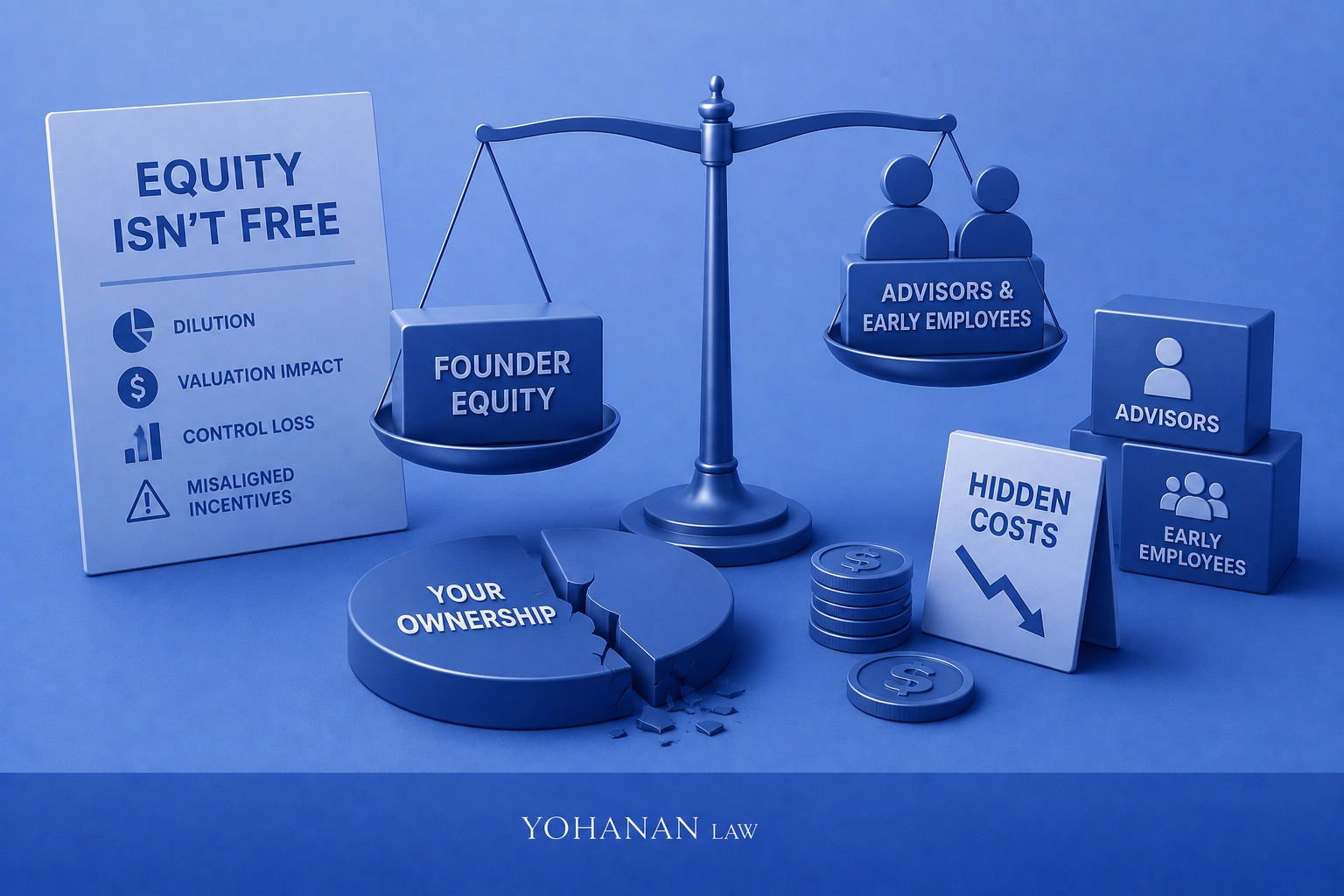
When starting a new company, many first-time founders think it’s a great option to only have to pay advisors and early contributors with equity. It feels painless. There’s no cash leaving the company and now there is momentum for their business.
Two years later, with a term sheet on the table, the founders discovered the bill had come due. Advisors and employees end up owning close to 10% (sometimes with no vesting), the option pool was nearly empty, and the VC fund is insisting on a 10% pool “refresh” before closing. Overnight, the founders’ stake drops below what they need to maintain control or attract a seasoned executive team.
Let’s break down why over-granting equity is so costly, the common pitfalls that set founders up for trouble, and practical frameworks to get it right.
1) Common Reasons Founders Over-Grant Equity
A lot of founders think of equity as a way to keep their cash balance higher for longer, especially if they are running low on cash in the first place. So, in an effort to keep cash in the bank, they offer equity instead.
At the idea stage, 1% doesn’t feel like much. But giving out 1% to multiple people can add up quickly. At the beginning of an advisor relationship, the advisor may promise that they’ll be really involved in the company’s growth. Everyone has optimistic goals and is excited about the new opportunity. But the reality is that the advisor may join a few meetings, make a couple of introductions, and then they get busy, and you never hear from them again.
Now you’ve given up 1% of your company to someone who only helped the company for a couple of months 2 years ago.
2) The Consequences of Over-Allocating Equity
VCs will inspect your cap table like forensic auditors. If you’ve given out big advisor stakes, with little to no vesting, and you have a depleted option pool, that suggests to the VC that there is a governance risk and future hiring constraints. As a result, giving out large grants to early advisors leaves founders with less negotiating leverage in future rounds.
Additionally, giving out equity means you have other stakeholders involved in the decision making for your company. Advisors or early contributors with oversized equity but little involvement can block or complicate strategic decisions. And you have to include them in the discussion when the founder should be the one making the decisions at this stage.
And finally, hiring is harder when you have given up a lot already to early contributors. If the option pool is thin, you can’t compete for senior talent later. You’ll be forced into a painful equity pool refresh (expanding the pool pre-money), which dilutes existing holders, often as a requirement for receiving VC funding.
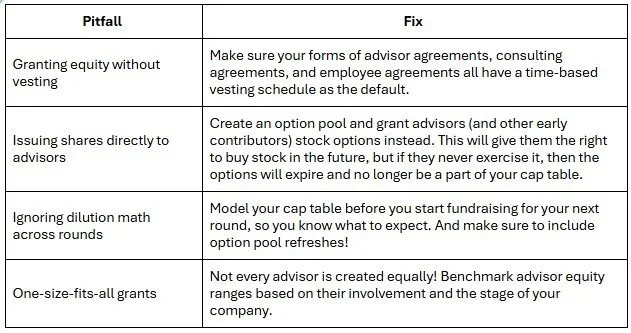
3) Common Pitfalls (and Simple Fixes)
4) Best Practices for Smart Equity Allocation
Always have written agreements with advisors, consultants, and agreements that clearly state the number of shares and the vesting schedule of their option. Have a clear path to terminate the agreement if the contributor isn’t really contributing anymore. This gives you the opportunity to stop vesting if the advisor is no longer able to help.
Stay within the standard ranges for early contributors based on their actual involvement. Generally, early-stage folks should get between 0.25% - 1.0%, with the 1.0% saved for the very active and hands-on advisors/employees.
Plan for the future. Ask yourself “will this cap table still look healthy when a lead investor joins and asks for a 10–12% option pool post-money?”
Use other non-cash incentives wisely. This can include stipends, success-based bonuses, and short consulting projects. These other incentives can reduce the temptation to hand over equity too early.
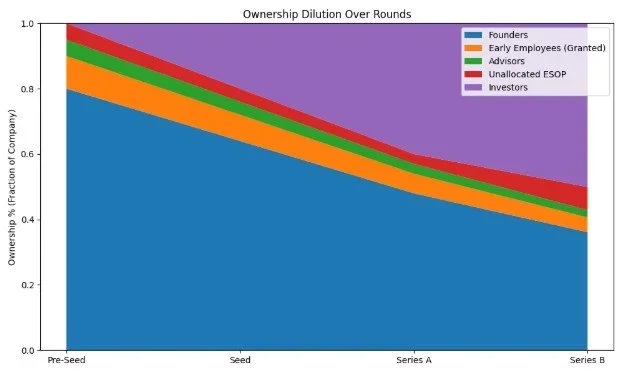
5) Visual: How Dilution Adds Up (and Why Over-Granting Hurts)
Below is a simple modeled scenario. Here’s the starting cap table (pre-seed):
Founders: 80%
Early Employees (Granted): 10%
Advisors: 5%
Unallocated Option Pool: 5%
Investors: 0%
We then run three rounds with typical assumptions:
Seed: Investors 20% post; Option Pool refreshed to 10% post.
Series A: Investors 25% post; Option Pool to 12% post.
Series B: Investors 20% post; Option Pool to 15% post.
Conclusion
Equity feels abundant when the company is small; it becomes precious as you grow. Over-granting to advisors and early employees can quietly erode control, spook investors, and box you in when you need to hire heavy hitters. Treat equity like gold: use vesting, set measurable milestones, model future dilution, and keep your option pool healthy. The discipline you show early will buy you freedom later!